
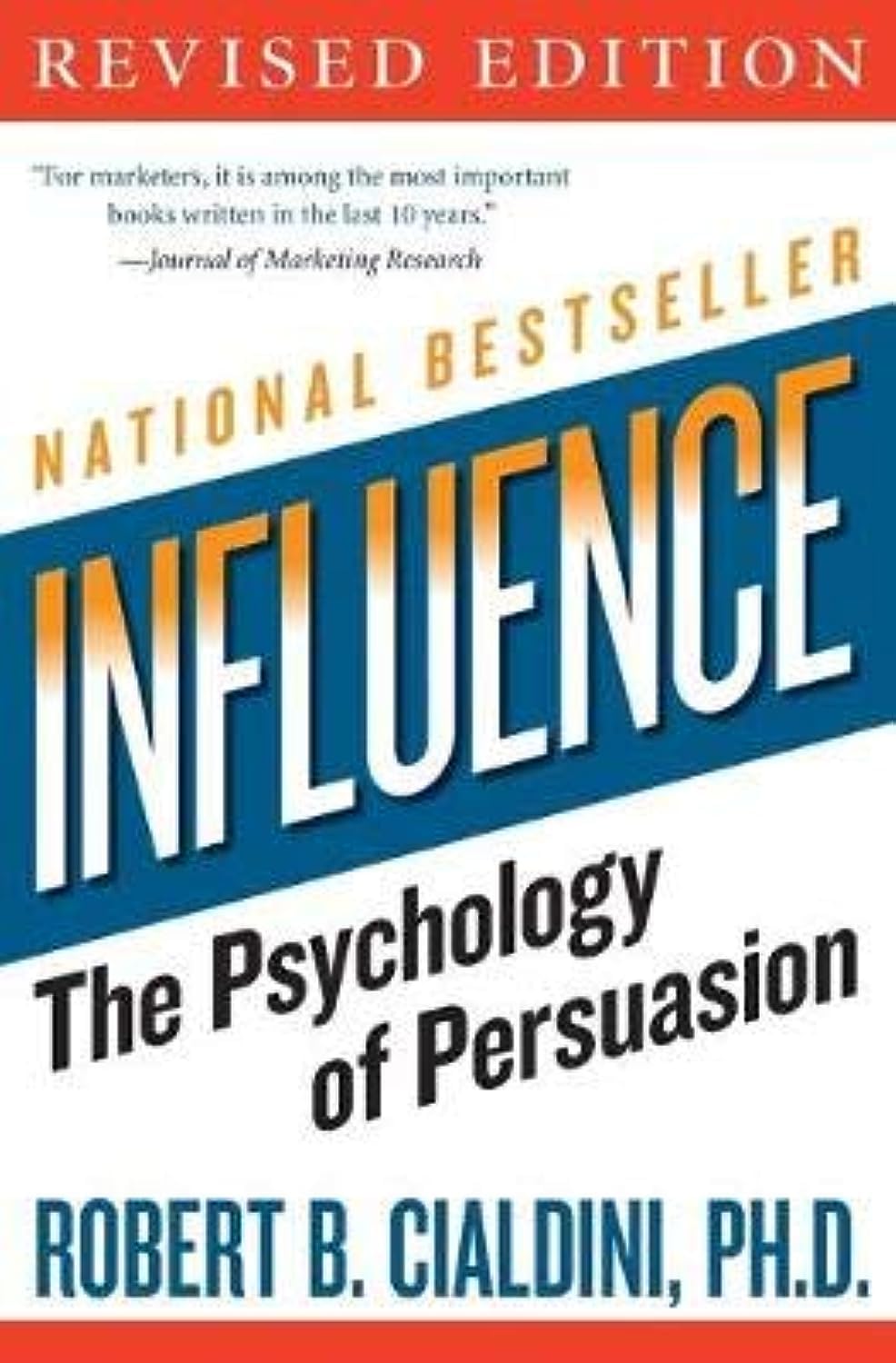
You sign up for a gym membership you didn't want. You buy the last available item even though ten minutes earlier it didn't interest you. You say yes to a stranger simply because they gave you something you never asked for. None of those decisions came from analysis — they came from a reflex that someone had learned to trigger. Robert Cialdini spent years working undercover inside sales schools to document how that reflex works and what sets it off.
Cialdini, a social psychologist, built this system after three years working undercover as a salesman, fundraiser and advertising agent, observing firsthand which triggers persuasion professionals rely on. In Eudaimanya it serves as a map of the automatic mechanisms that govern compliance.
If you remember one idea
Most of your "yeses" aren't decided by your reason — they're decided by a reflex that fires on its own, and anyone who knows the right trigger can pull it for you.
- Seven automatic triggers — reciprocity, commitment, social proof, liking, authority, scarcity and unity — produce compliance without passing through conscious thought.
- These reflexes exist because in most cases they are useful shortcuts; the problem arises when someone deliberately simulates them.
- The reflex can be deactivated: naming it while it's happening is enough to strip away most of its automatic force.
Audiovisual analysis
Audiovisual summary and podcast on the book’s central ideas.
Before we begin
The minimum vocabulary for understanding the system
These are the concepts that underpin the rest of the analysis. Without them, the seven triggers will seem like a loose collection of tricks; with them, they read as components of a single mechanism.
Automatic Response ("Click, Whirr")
What it means: when faced with a specific stimulus, we execute a fixed sequence of behaviour without passing through any conscious analysis of the situation.
Why it matters: it is the mechanism that makes everything else possible — without the automatic response, none of the triggers would have power over our decisions.
Fixed-Action Pattern
What it means: the behavioural "script" the brain runs in full the moment it detects the right cue — more like a reflex than a decision.
Why it matters: it explains why we react the same way to very different stimuli, provided they share the same triggering feature.
Trigger (Activating Factor)
What it means: the minimal feature of a situation — a title, a scarcity, a gift — that activates the fixed pattern without any deliberation.
Why it matters: identifying the specific trigger is the first step towards not reacting automatically to it.
Perceptual Contrast
What it means: the same object or request seems larger or smaller depending on what was presented immediately before it.
Why it matters: it explains why we accept requests we would reject if they hadn't been preceded by a more extreme version.
Social Jujitsu
What it means: the technique of using the recipient's own psychological force — their internal rules — rather than external arguments to obtain compliance.
Why it matters: it renders the influence nearly undetectable, because the target attributes the decision to themselves, not to whoever prompted it.
Controlled Response
What it means: the state in which the recipient both wants and is able to analyse information carefully.
Why it matters: it is the only condition that deactivates the automatism, and therefore the key to any real defence.
Book map
Problem
We decide on autopilot without realising it
Common mistake
Believing every "yes" was a reasoned choice
Thesis
Compliance is triggered, not thought through
Framework
Seven triggers of the Automatic Response
Application
Naming the trigger while it's happening
Outcome
Fewer unchosen compliances
01 — The reflex that decides for you
The reflex that decides for you
Nobody consciously signs something intending to regret it later. Yet every day thousands of people accept terms, prices, or favours that, viewed calmly, they would never have approved. The question driving this book is not what convinces us, but what makes us stop thinking before we say yes.
The widespread assumption is that our everyday decisions result from weighing information. Cialdini documents the opposite: most of those "yeses" are executed as a fixed-action pattern — a sequence that fires in full the moment the right trigger appears, just as a turkey hen responds to the cheeping recorded from a chick even when it comes from a stuffed polecat.
Core thesis
We don't decide with our heads as often as we believe: we decide with reflexes, and anyone can learn to activate them.
The book's most uncomfortable proof is also its simplest: a jewellery shop failed to sell a batch of turquoises until a mislabelling error accidentally doubled their price. They sold out within days. No one valued them more because they'd analysed them more carefully — they valued them more because they cost more.
02 — How the automatic response is triggered
How the automatic response is triggered
The mechanism behind each trigger is always the same circuit, regardless of which of the seven disguises it wears.
A trigger, here, is the minimal feature — a word, a uniform, a figure about to run out — capable of firing the fixed-action pattern without passing through the conscious filter. Once activated, that pattern runs to completion: it doesn't stop halfway to check whether the stimulus was genuine or manufactured.
Persuasion professionals don't invent new triggers: they manufacture cheap imitations of existing ones, much like a canned laugh track that gets audiences laughing harder even when they know it's artificial.
03 — The seven triggers
The seven triggers
Each of these seven principles exploits a different social rule, but all share the same structure: they activate a fixed pattern without passing through conscious analysis.
01
Reciprocity
The obligation to give back what we've received. An unsolicited gift creates an automatic social debt — enough to force concessions far larger than what was given.
02
Commitment and consistency
The drive to act in line with what we have already said or done. A small, public commitment pushes us to sustain ever-larger decisions.
03
Social proof
Determining what's correct by observing what others do — especially under uncertainty. This can paralyse an entire group in the face of a genuine emergency.
04
Liking
The tendency to say yes to people we know, who flatter us, or who resemble us. Physical attractiveness transfers, without justification, to other perceived qualities.
05
Authority
Automatic deference to titles, uniforms or status symbols — replacing one's own judgement with obedience to whoever appears to know more.
06
Scarcity
A limited or vanishing resource triggers an emotional reaction of potential loss that clouds rational assessment of its actual value.
07
Unity
The perception of sharing an identity — family, community, team — lowers defences towards messages from whoever feels like part of that "we".
04 — Why the reflex exists (and why it can be hijacked)
Why the reflex exists (and why it can be hijacked)
Beneath the seven triggers lies a three-layer architecture — and understanding all three explains why the system works so well and why it's so hard to neutralise.
1
The visible tactics
Rejection-then-retreat, foot-in-the-door, low-ball: specific, replicable techniques. These are the layer taught in sales manuals, but knowing them without understanding the underlying principle makes it impossible to anticipate their variants.
2
The seven psychological principles
Each visible tactic is the concrete application of one of the seven principles from the previous section. This is the level at which defence can be generalised, rather than memorising tricks one by one.
3
The evolutionary architecture of the shortcut
The seven principles exist because, in the vast majority of cases, they were reliable shortcuts: deferring to authority, reciprocating favours, or trusting the majority reduced the risk of error in an environment where analysing everything in detail was costly or impractical.
That same evolutionary efficiency is what a stranger armed with the right tools can hijack within seconds, without the recipient noticing anything out of the ordinary.
05 — When the reflex fails
When the reflex fails
The system is not infallible, and knowing its failure modes is just as useful as knowing its triggers.
Controlled response
When the recipient both wants and is able to analyse the situation calmly, the automatic pattern never gets to fire.
Trigger too obviously faked
If the imitation of the stimulus is too crude — a canned laugh that's obviously fake, a scarcity claim repeated every week — the effect fades or disappears.
Reactance
An influence attempt that's too visible can produce the opposite effect: the recipient resists precisely because they sense they're being manipulated.
No exit protocol
The system itself documents well how the reflex is activated, but doesn't offer a clear architecture for deactivating the bias once the stimulus has passed.
None of these failure modes make the system harmless: they merely mark the conditions — calm, attention, reasonable suspicion — under which it stops working.
06 — Protocol for recognising the trigger
Protocol for recognising the trigger
The book doesn't offer an attack formula; above all it offers a defence protocol that begins with naming what's happening.
01
Name the trigger
At the moment of the request, identify which of the seven principles is at play: reciprocity, commitment, social proof, liking, authority, scarcity or unity.
02
Separate the decision from the stimulus
Ask yourself whether you'd accept the same request if the gift, the deadline or the title were removed from the equation.
03
Verify the trigger's authenticity
Check whether the scarcity, authority or social proof you're being shown is genuine or was manufactured for the occasion.
04
Apply a deliberate delay
Postpone your response, even by just a few minutes — most of these mechanisms lose their force once the moment of pressure has passed.
05
Reassess in a cooler state
Return to the request with the stimulus no longer active and decide again — this time from a controlled response, not from the reflex.
What to remember
- Almost no everyday "yes" stems from thorough analysis: it stems from a fixed pattern that fires when the right trigger appears.
- The seven triggers — reciprocity, commitment, social proof, liking, authority, scarcity and unity — work best when you're distracted, tired or pressed for time.
- Perceptual contrast can make a moderate request seem small simply because of what was presented right before it.
- Naming the trigger while it's happening interrupts much of its effect, because the system depends on acting without passing through awareness.
- The system collapses before the Controlled Response: when someone has the time, the calm and the reason to analyse, the reflex never fires.
What this book does not say
Influence is not a manual for manipulating others more effectively, even though it describes the techniques in enough detail to replicate them. Cialdini wrote it — and explicitly documents it — as a defence guide: understanding the mechanism so as to stop being its target, not to become its operator. Nor is it an infallible shield: the system itself acknowledges that, even knowing all seven triggers, we remain vulnerable to them when we're tired, rushed or distracted — which is precisely when we need protection most.
Synthesis
The yes nobody thought about
The system described here doesn't explain why people lie or why others deceive us: it explains why, under ordinary conditions, no one even needs to lie to get a yes. All that's needed is to activate the right pattern.
The more complex and stimulus-saturated everyday life becomes, the less time remains for the Controlled Response and the more ground the reflex gains. The question is no longer whether someone will try to trigger your automatic responses — it's how often they're already doing it without you noticing.
How many of the important decisions in your life were truly yours — and how many were the automatic "yes" that someone else knew how to trigger?